Designing a kids room is one of the most exciting parts of creating a home. After all, it’s not just a bedroom, it’s a play zone, a study space, a dream factory, and a personal world all rolled into one. However, designing it well isn’t easy. You need to balance fun with function, style with safety, and creativity with practicality.
In fact, the best kids rooms grow with the child, support their imagination, and make daily life easier for parents too. So, if you’re planning to design your child’s room this year, these smart and stylish kids room design ideas will inspire you with everything you need, from layout and storage to colours, themes, and décor.
Moreover, working with the Best Interior Designer in Jaipur ensures your kids room is not only beautiful but also safe, durable, and tailored to your child’s personality.
Let’s dive into the smartest design ideas that every modern parent will love.
Why Kid's Room Design Matters
Before we explore the ideas, it’s worth understanding why kids room design deserves special attention.
A Space That Shapes Their Growth
A well-designed room directly impacts your child’s mood, creativity, focus, and sleep quality. In other words, the right design supports both their emotional well-being and learning ability.
A Space That Adapts as They Grow
Children grow fast, and their needs change every few years. Therefore, a smart kid’s room should be flexible enough to evolve from a toddler’s playroom to a teenager’s personal space without a complete makeover.
1. Start with a Smart Layout
First and foremost, every great kid’s room starts with thoughtful space planning.
A smart layout divides the room into clear zones: sleeping, studying, playing, and storage. As a result, your child learns boundaries, stays organised, and feels in control of their space.
Layout Tips That Work
- Firstly, place the bed against a solid wall for comfort and safety.
- Secondly, position the study desk near a window for natural light.
- Next, keep play areas in the centre or open zones.
- Finally, place storage solutions along less-used walls.
For expert space planning, our Architectural Planning & Spatial Engineering service helps you design layouts that maximise every inch.
2. Choose Cheerful Yet Calming Colours
Next, colour plays a huge role in shaping your child’s mood and energy.
While bright colours look fun, too many of them can overstimulate kids. So, I would like to aim for a balanced palette that is cheerful yet calming.
Best Colours for Kids Rooms
- Soft pastels (mint, lavender, peach, sky blue)
- Warm earthy tones (beige, terracotta, mustard)
- Soft whites with one accent wall
- Gender-neutral shades like sage green or buttery yellow
In fact, a study by Verywell Mind shows that soft, soothing colours promote better sleep and concentration in children, exactly what every parent wants.
Colours to Avoid
On the other hand, avoid harsh neons, overly dark shades, or too many bright colours together. Otherwise, the room may feel chaotic and tiring.
3. Pick Furniture That Grows With Your Child
Buying new furniture every few years is expensive, and frankly, unnecessary. Instead, invest in smart, adaptable furniture that grows along with your child.
Smart Furniture Ideas
- Convertible cribs that turn into toddler beds
- Adjustable-height study desks and chairs
- Modular wardrobes with movable shelves
- Bunk beds with built-in storage and study zones
- Beds with hydraulic storage underneath
Furthermore, our Personalized Furniture Service crafts custom kids furniture that’s safe, durable, and perfectly sized for your child’s room and age.
4. Maximise Storage with Creative Solutions
Let’s be honest, kids come with a lot of stuff. Toys, books, clothes, art supplies, and school gear can pile up quickly.
Therefore, smart storage is the secret to keeping a kid’s room tidy and stylish.
Genius Storage Ideas
- Firstly, use under-bed drawers for toys or seasonal clothes.
- Secondly, install floating shelves for books and display items.
- Next, add labelled storage bins for easy organisation.
- Also, use wall-mounted hooks for bags, hats, and jackets.
- Finally, choose ottomans and benches with hidden storage.
Above all, teach your child where each item belongs. As a result, cleaning up becomes a habit instead of a chore.
5. Design a Dedicated Study Zone
As children grow, study time becomes a daily routine. So, creating a focused study zone is essential, even in a small room.
A Great Study Zone Includes
- A sturdy, height-adjustable desk
- An ergonomic chair with back support
- Good lighting (natural + task lamp)
- A pinboard or whiteboard for ideas
- Easy access to books and supplies
Importantly, keep the study area away from the bed to separate work and rest energy. Likewise, avoid placing it directly facing a wall, instead, position it near a window for natural light and focus.
6. Create a Fun Play Area
While function matters, fun is equally important. After all, a kids room should be a place where imagination runs wild.
Easy Play Zone Ideas
- A soft rug for floor play
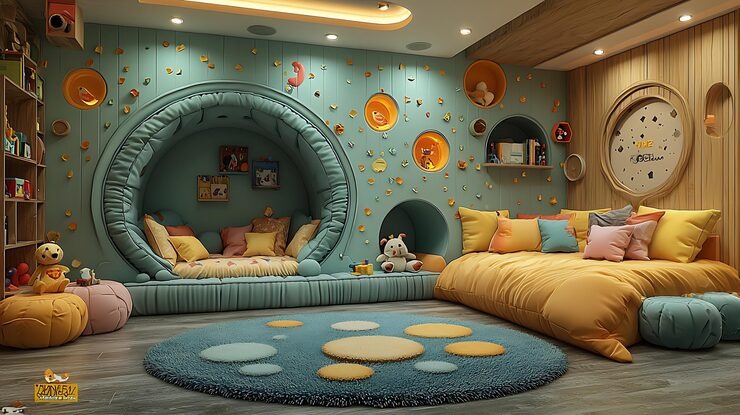
- A cosy reading nook with cushions
- A small tent or teepee
- A chalkboard wall for drawing
- Wall stickers or murals of their favourite themes
Moreover, choose a theme based on your child’s interests: space, jungle, princess castle, sports, or under the sea. As a result, the room becomes a magical world they love spending time in.
7. Prioritise Safety in Every Detail
Of course, no design idea matters if the room isn’t safe. Therefore, safety should be at the heart of every decision.
Key Safety Tips
- Use rounded-edge furniture to prevent injuries.
- Anchor tall furniture (wardrobes, shelves) to the wall.
- Cover electrical outlets with safety plugs.
- Choose non-toxic, low-VOC paints and materials.
- Install window guards if the room is on an upper floor.
- Use anti-slip rugs and mats.
Additionally, the Indian Green Building Council (IGBC) recommends using eco-friendly, child-safe materials that protect indoor air quality, especially in spaces where children spend long hours.
8. Add Smart Lighting for Mood and Function
Lighting is often overlooked, yet it completely changes how a kids room feels and functions.
Use Layered Lighting
- Ambient lighting — soft overhead lights for general use
- Task lighting — a focused desk lamp for studying
- Accent lighting — fairy lights, night lights, or themed lamps
Importantly, dimmable lights are a fantastic option. They create a calm bedtime atmosphere while still being bright enough for play and study. Furthermore, a warm-toned night light helps younger kids sleep better and feel safe.
9. Personalise with Décor and Wall Art
Now comes the fun part: adding personality to the space. Décor is what truly makes a kid’s room feel theirs.
Personalisation Ideas
- Frame their artwork on the wall
- Display name letters above the bed
- Add a height-tracking growth chart
- Use peel-and-stick wall decals
- Hang a creative gallery of family photos
- Add themed cushions, throws, and bedding
Most importantly, involve your child in the décor choices. As a result, they’ll feel proud, responsible, and emotionally connected to their room.
10. Design for the Future
Finally, the smartest kids room is one that doesn’t need a complete redesign every few years. Therefore, build flexibility into the design from the start.
Future-Proof Design Tips
- Choose timeless, neutral base colours
- Use removable décor (decals, posters) for themes
- Pick modular furniture that can be reconfigured
- Plan storage that adapts as belongings change
- Avoid hyper-specific themes that kids outgrow fast
In short, build the bones of the room to last, but keep the personality flexible. This way, a few small updates can keep the room fresh as your child grows.
To see how this works in real projects, explore our Residential & Commercial Interior Design services for fully customised kids room solutions.
Bringing It All Together
Clearly, designing a kids room is about much more than picking cute furniture. Instead, it’s about creating a space that’s safe, fun, functional, and ready to evolve with your child.
When designed thoughtfully, a kids room can:
- Boost creativity and learning
- Improve sleep quality and focus
- Teach organisation and responsibility
- Provide a personal sanctuary for your child
Of course, balancing all these elements isn’t easy. So, if you’d like expert help, the Best Interior Designer in Jaipur can craft a kids room that’s smart, stylish, and built to grow with your little one. You can also browse our Portfolio to see real kids rooms we’ve designed.
Final Thoughts
In conclusion, a smart and stylish kid’s room isn’t just about looking pretty. It’s about creating a space where your child can sleep, learn, play, and dream comfortably. By balancing fun with function, safety with style, and creativity with organisation, you can design a room that truly supports your child’s growth.
To sum up, the best kid’s rooms are designed with both heart and strategy. So, take your time, plan smartly, and don’t hesitate to bring in experts when you need them.
So, ready to design a kid’s room that’s safe, stylish, and built to grow? Connect with the Best Interior Designer in Jaipur — Ravi Vastu Interior, and bring your child’s dream room to life.
Frequently Asked Questions (FAQs)
A smart kid’s room balances four essential zones: sleeping, studying, playing, and storage. Additionally, it includes adaptable furniture, safe materials, smart lighting, and personalised décor. Above all, the design should be flexible enough to evolve as the child grows.
Soft pastels (mint, peach, lavender, sky blue) and warm earthy tones (beige, mustard, sage) work best. These colours feel cheerful yet calming. On the other hand, avoid harsh neons or overly dark shades, as they can overstimulate or tire children.
Use space-saving furniture like bunk beds, beds with hydraulic storage, and wall-mounted shelves. Furthermore, stick to light wall colours, add mirrors strategically, and choose modular storage solutions. Finally, declutter regularly to keep the space breathable and tidy.
A kids room interior design in Jaipur typically costs between ₹80,000 and ₹2.5 lakhs, depending on furniture quality, customisation, and finishes. Of course, prices vary based on room size and the complexity of the design. For an accurate estimate, it’s best to consult an expert interior designer.
Choose timeless neutral base colours, modular furniture, and adaptable storage. Then, layer in personality through removable décor like wall decals, posters, and themed bedding. As a result, you can easily refresh the room every few years without a major overhaul.